
Program and slides
Day 1, Tuesday, April 14, 2015:
08.30-09.30
Arrival, coffee and registration
Plenary morning session - Gyllene Salen, ground floor
09.30-9.35
Plenary sessionConference opening by moderators
Moderator for plenary and content sessions

Nigel Lewis is the CEO of Ability Net, one of the UK’s leading charities on accessibility. He has a long experience as an IT consultant and is the chairman of One Voice for Accessible ICT Coalition and Digital Inclusion Group and Vice President of the International Association of Accessibility Professionals, IAAP.
Moderator for the technical sessions

Lillian Ayla Ersoy is an UX expert and head of Insight & Analysis at Bekk Consulting in Norway. She has extensive experience of visual communication, concept development and creating digital services that engage and bring joy. Lilian has also lectured at several Norwegian universities.
09.35-10.30
Plenary sessionLack of accessibility – a ground for discrimination
Since January 1, 2015 lack of accessibility is a form of discrimination in Sweden. What does the new prohibition mean? Which types of concerns does the Swedish Equality Ombudsman, DO, focus on and why?

Sara Stenberg is a lawyer working as an investigator at the Swedish Equality Ombudsman, DO. She often gives lectures on the Swedish Discrimination Act.
Sara Stenberg, presentation in Swedish, powerpoint (2,1 Mb), opens in new window
10.30-11.00
Plenary sessionDigital barriers in Norway
The Norwegian public authority with responsibility for information accessibility, Difi, has begun to monitor accessibility on Norwegian private and public sector websites. The results from the monitoring and examples on flaws that have been documented will be presented.

Malin Rygg is responsible for the Unit of Supervision at the Agency for Public Management and eGovernment, Difi. The Agency is responsible for the supervision of the IT part of the Anti-Discrimination and Accessibility Act. Malin is a lawyer with experience from the Norwegian Competition Authority, and she has previously worked as an attorney and a judge.

Dagfinn Rømen works as a technologist at the unit for IT-accessibility at Difi. He has been responsible for measuring accessibility of websites conducted in the fall of 2014. Dagfinn has worked in web accessibility for several years, and among other assignments contributed to the translation of WCAG 2.0 into Norwegian.
Malin Rygg and Dagfinn Rømen, presentation in Norwegian, pdf (5,8 Mb), opens in new window
11.00-11.30
Plenary sessionMeantime, in the real world...
We have already seen effects of the new legislation in Sweden, and the slightly older law in Norway, both positive and negative. At the same time Funka develops, on behalf of the EC, a methodology that could be used by EU member states if and when the proposed directive on web accessibility passes. Is this the beginning of red tape and micro-management or an opportunity for innovation and creativity?
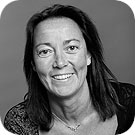
Susanna Laurin is CEO of Funka and a member of the board of the International Association of Accessibility Professionals, IAAP. She is a fellow of the Swedish government’s forum for usability and accessibility, and a number of standardisation committees; among others, she worked on the EN301549.
Susanna Laurin, presentation in Swedish, powerpoint (20 Mb), opens in new window
11.30-12.30
Lunch is served on the ground floor, possibility to change premises
Track 1: Content, design and navigation - Gyllene Salen, ground floor
12.30-13.15
Track 1Designing for extreme users... without trade-offs
When we design for the extreme user, everyone benefits. However, designers, writers and marketing strategists are often understandably concerned that the intriguing interface they have carefully crafted will be lost on the way to making the user experience accessible to all. But in a perfect world the principles on inclusive design results in a better UX for everyone. The important thing is to understand how and why we can go about it.
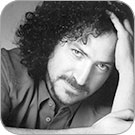
David Berman is a designer and IT strategist with over 30 years of experience in working with accessibility and design. From Canada, David’s professional work has brought him to over 50 countries. He is active in ISO and a high-level advisor to the United Nations on how accessible Web design thinking can help fulfil the Millennium Development Goals.
David Berman, presentation, pdf (8,6 Mb), opens in new window
13.15-14.00
Track 1Ask a silly question...
We want users to understand and appreciate what we develop. But how do we, as developers, understand what those users really think? How do we involve these awkward types we call users to be a part in design and development processes? How do we find out what is important for them? Funka is working with organisations and individual users to come up with a method of real user involvement that works for everyone.
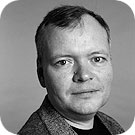
Stefan Johansson is an ideologist and accessibility expert at Funka. Stefan is also an industrial PhD student at the Royal Institute of Technology in Stockholm, in the field of cognitive accessibility. At Funka he works with reviews, user testing and designing user interfaces that work for all users.
Stefan Johansson, presentation in Swedish, powerpoint (3,8 Mb), opens in new window
14.00-14.15
Coffee break, on both floors, and possibility to change premises
14.15-15.00
Track 1Accessibility for the apathetic
Let’s face it. Not all web teams consist of passionate accessibility experts. For the average developer or designer, accessibility can be both intimidating and complex. But there are strategies to integrate accessibility in projects without driving everyone crazy or confused. This lecture demonstrates methods that make the web both better and easier to use.
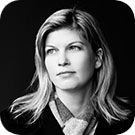
Lyza Danger Gardner is a developer and co-founder of the Portland, Ore.-based Cloud Four. She has built, broken and hacked web things since 1996. Lyza has tortured and thrilled herself with the intricate ins and outs of the bazillion devices and browsers now accessing the web globally. Lyza and co-founder Jason Grigsby are the authors of Head First Mobile Web.
Lyza Danger Gardner, presentation, pdf (8 Mb), opens in new window
Track 2: Technology, development and assistive technology - Solliden, upstairs
12.30-13.15
Track 2Video – for everyone
MVideo is a format that works well for many users, but only if you do it right. What requirements should be used and what functionality is helping the users? We look at some of the most common players and compare them from an accessibility point of view.
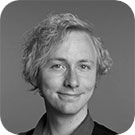
Danne Borell is an accessibility expert at Funka. He focuses on accessible video, closed captioning and alternative formats, such as PDFs. Danne educates, performs audits and reviews technical accessibility.
Danne Borell, presentation in Swedish, powerpoint (16,9 Mb), opens in new window
13.15-14.00
Track 2A Prosaic Talk About Accessibility
So much of accessibility is about words, what words you choose, how they are written and in what typefaces. Words are the bread and butter of web communication and are paramount for screen reader accessibility, even in highly visual designs. This talk is all about text, from basic text nodes to supplementary text with WAI-ARIA, text in SVG, the pitfalls of ”accessible” fonts and the art of microcopy.
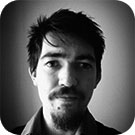
Heydon Pickering is the accessibility editor for Smashing Magazine and lead designer at Neontribe in the UK. He likes to paper prototype and build web applications for non-profits and charities. He is also an illustrator and has created a children’s book all about crabs called "Crabs Are Odd".
14.00-14.15
Coffee break, on both floors, and possibility to change premises
14.15-15.00
Track 2Showcase Skandiabanken: A focus on accessibility gave a better user experience for all
There are many challenges when different technologies are put together into an entirety that is modern, responsive and accessible, all at the same time. Skandiabanken’s goal is an outstanding UX, and the requirements for accessibility increased the quality and created a better solution for all.
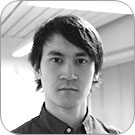
Snorre Kim is a developer at Skandiabanken in Norway. He is committed to modern web solutions and has worked on the bank’s new website. Snorre’s dedicated work is one of the reasons Skandiabanken views accessibility as something positive and a competitive edge, rather than simply a requirement.
Snorre Kim, presentation in Norwegian, powerpoint (3 Mb), opens in new window
Plenary session - Gyllene Salen, ground floor
15.00-15.30
Plenary sessionMuch more than screen readers
10% of the population use some kind of assistive technology. One per thousand use screen readers. This session demonstrates many ways of controlling a computer (input), and how to get information (output). Some of these you are guaranteed never to have seen before. How are they used and what is required of your website or e-service to make them work?
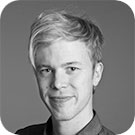
Hampus Sethfors is an accessibility expert at Funka. He educates, conducts user testing and reviews. Besides, he is responsible for Funka’s sign language services. He came to Funka by way of winning a hackathon competition where his team developed an app for persons with cognitive disabilities.
Hampus Sethfors, presentation in Swedish, powerpoint (21,1 Mb), opens in new window
15.30-16.00
Surprise
Following tradition, we offer a surprise after the first day’s seminars. As usual, we dare to promise that it will be a first time for everyone!
16.00-18.00
Networking and exhibition - Djurgårdssalen, upstairs
Welcome to our exhibition with stations where you can try different assistive technologies, talk to end users, or ask our experts everything you want to know about accessibility. Or, you can just enjoy the view and relax with sparkling wine and canapés while networking with other participants.
An exciting part of the exhibition is Versoteq who will demonstrate how 3D technology can be used to increase accessibility. For instance by letting visitors at museums have a new and more intimate relationship to objects that you are normally not allowed to touch. It is both about fascinating 3D mock-ups on the screen that you can twist and turn, but also exact physical replicas in shape of 3D printed objects that you can touch and feel.
This year you will also have the opportunity to take part in exciting competitions in the Gaming corner. Are you up for the challenge? Try games you thought you knew, but play them in a completely different way. All games are controlled with assistive technology and if you are successful you might win a nice prize!
Day 2, Wednesday, April 15, 2015:
08.00-08.30
If you are only attending today, you are welcome to register. Otherwise, please join us for a cup of coffee before the conference starts.
Planary morning session - Gyllene Salen, ground floor
08.30-09.15
Plenary sessionWhat can we learn from Canada?
After a court ruling where a blind Canadian prevailed against the Government of Canada (GC), the epic task began of training 4000 developers in order to convert 10 million web pages for the Canadian government. They were given only 15 months to accomplish the mammoth effort to transform the GC web presence into an environment inclusive of people with disabilities.

David MacDonald is the chairman of CanAdapt Solutions Inc. and active in W3C. He was lead WCAG advisor to the Canadian government and has given support to many companies and organisations in Canada, USA and Australia. David has a history on Broadway, which you will notice when he talks. Perhaps he is most famous for his WCAG theme song with over 40,000 YouTube views.
David MacDonald, presentation, powerpoint (9,6 Mb), opens in new window
09.15-10.00
Plenary sessionWhy UX fails: The excruciating results of smart people making bad decisions
This presentation is built on experiences with failed UX projects over the years, what went wrong and how it can be avoided. There are many misconceptions of UX and UI. What can be done to succeed? The talk gives simple steps and checklists to creating great user experiences.
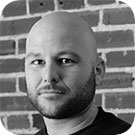
Chris Feix has more than 20 years of experience in web- and application design and has co-founded several companies. He is an UX evangelist and a popular lecturer all over the world. This is the first time Chris speaks in Sweden and he brings his latest book "UX is the New Black".
Chris Feix, presentation, powerpoint (22,1 Mb), opens in new window
10.00-10.15
Coffee break
10.15-10.45
Plenary sessionWeb accessibility myths for the mobile generation
A lot of what you thought you knew on accessibility is based on old documentation that no longer applies. With insights gained from recent user research and user testing with disabled and elderly people, this lecture dispels a number of established myths. Instead you will gain new insights and recommendations that work.

Dr Jonathan Hassel has many years of experience as an accessibility expert. He is the former Head of Usability & Accessibility for BBC Future Media and has won several awards for his efforts. He runs the consultancy Open Inclusion, is active in standardisation and a popular lecturer.
Dr Jonathan Hassel, presentation, powerpoint (32,6 Mb), opens in new window
Track 1: Content, design and navigation - Gyllene Salen, ground floor
10.45-11.30
Track 1Acknowledge the user
From the beginning the Internet meant one-way communication, not much more than a digitised paper. Today, it is a whole different situation; to a much larger extent the Internet is a dialogue between the user and the web service. This requires more from the web service in terms of communicating with and providing feedback to the user. This is an area that is often neglected, and we will give you examples of how to work withit in an efficient way.
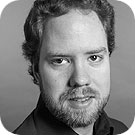
Andreas Cederbom is Head of Analysis at Funka. Andreas is specialised in WCAG and other regulations on accessibility, and also on different assistive technology. He is a popular lecturer and trainer in both technical and pedagogical accessibility.
Andreas Cederbom, presentation in Swedish, powerpoint (9,4 Mb), opens in new window
11.30-12.30
Lunch is served on the ground floor, possibility to change premises
12.30-13.15
Track 1Games and gamification for learning
How can games and design from games be used for educational and other purposes? What is gamification? How can games be used to create change and development? The talk gives insights into how the last years’ of development in games can be applied to digital interfaces in general.

Carl Heath is a scientist and designer at the Interactive Institute Swedish ICT. He is active in the borderline between IT, learning and interaction design. Carl has produced and designed games for learning as well as educational and interactive material for both Swedish and international actors.
Carl Heath, presentation in Swedish, pdf (17,6 Mb), opens in new window
During the lecture Carl Heath showed the following pages:
Khan Academy, opens in new window
DIY, online game to teach kids new skills, opens in new window
Google’s Aprils’ fool about playing Pac-Man on Google maps, opens in new window
13.15-14.00
Track 1Websites that work
Besides being accessible and responsive, your website must also solve the users’ problems or in other ways meet their expectations. What strategies do the users have when searching for information? How can you make sure they find what they are looking for? Can you minimise the time spent on searching? In this talk you will gain new perspectives on things you thought you knew about creating an efficient website.

Andreas Blackne is an accessibility and user experience expert at Funka. Andreas evaluates user interfaces, conducts user testing and develops concept sketches. He is also a training instructor and lecturer.
Andreas Blackne, presentation in Swedish, powerpoint (23,7 Mb), opens in new window
Track 2: Technology, development and assistive technology - Solliden, upstairs
10.45-11.30
Track 2Accessibility with Google Chrome and Android
Several of the tools that Google has developed can be used to improve the accessibility in your apps. Learn more about the screen readers ChromeVox and TalkBack and how they can be used. Google’s Accessibility Developer Tools is another example of the resources that Google provide online for improved accessibility.
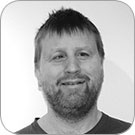
Peter Lundblad is the system developer who was awarded the Google O’Reilly Open Source Award for best all-round developer in 2006, and then landed a job at Google. He has led the development of support for braille in Android-based units and Chromebook-computers, contributed to program interfaces for accessibility and the development of the screenreaders TalkBack and ChromeVox.
Peter Lundblad, presentation in Swedish, zipped html (8,5 Mb), opens in new window
11.30-12.30
Lunch is served on the ground floor, possibility to change premises
12.30-13.15
Track 2Automatic versus manual testing
What potential is there in automation in measuring accessibility and how well do current tools perform when tested in the real world? Through a series of tests and examples we have documented possibilities and limitations in automatic tools. Which type of errors can the automatic tools find and how do you handle the results?
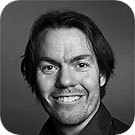
Torbjørn Helland Solhaug is an accessibility expert at the Funka office in Oslo, Norway. He works as an analyst and advisor in the field of technical and pedagogical accessibility. He also acts as a training instructor and gives lectures.
Torbjørn Helland Solhaug, presentation in Norwegian, powerpoint (7,1 Mb), opens in new window
13.15-14.00
Track 2Adaptive Images in responsive design
Smartphones and tablets not only contain more computing power and better browsers than the computers that started the Internet economy. They also have better displays, which demands more of us when we use images. This session will work through tips and tricks to develop future friendly images in our sites and apps.

Christopher Schmitt is an award-winning designer and author of several books on web and graphic design. He is a popular international speaker with more than two decades of experience in web design, yet endlessly curious and a relentless tinkerer. Christopher is always looking for ways to help educate and empower people about web publishing and Internet culture.
Christopher Schmitt, presentation, pdf (78,4 Mb), opens in new window
14.00-14.15
Coffee break on the ground floor, last sessions in Gyllene Salen
Plenary afternoon session - Gyllene Salen, ground floor
14.15-14.55
Plenary sessionLetting Go - Creating products and services in a time of disruption
In our globalized, hyper-connected world, users no longer have to wait for us to create experiences for them. As we debate and think, the users are sorting this out on their own. Is it a sign of failure when users choose “good enough”, over your carefully crafted product or service? Or, do you see it as a chance to dive headfirst towards a new reality?
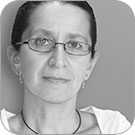
Stephanie Rieger is a designer, researcher and closet anthropologist with a passion for the many ways people use technology. She is the co-founder and one of the principals at Yiibu, and a mobile industry veteran. She has worked with companies such as Nokia, Microsoft, Intel and Phillips. Stephanie speaks at conferences and teaches workshops on mobile design and strategy all over the world.
Stephanie Rieger, presentation, pdf (163,3 Mb), opens in new window
14.55-15.00
Round up
Welcome back next year!
Susanna Laurin, presentation, powerpoint (2,2 Mb), opens in new window